The Q Rickshaw Project
2022
Karachi
Curated by Amin Gulgee and Adam Fahy-Majeed
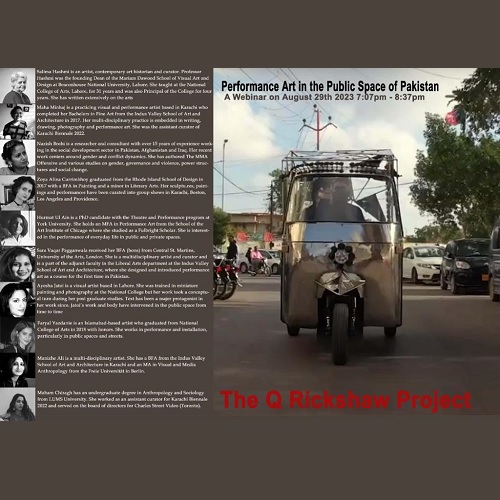
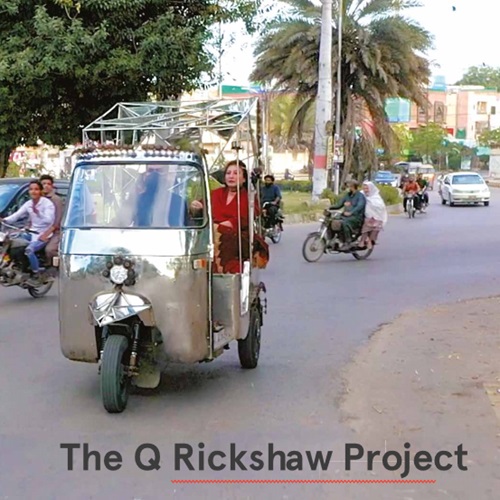
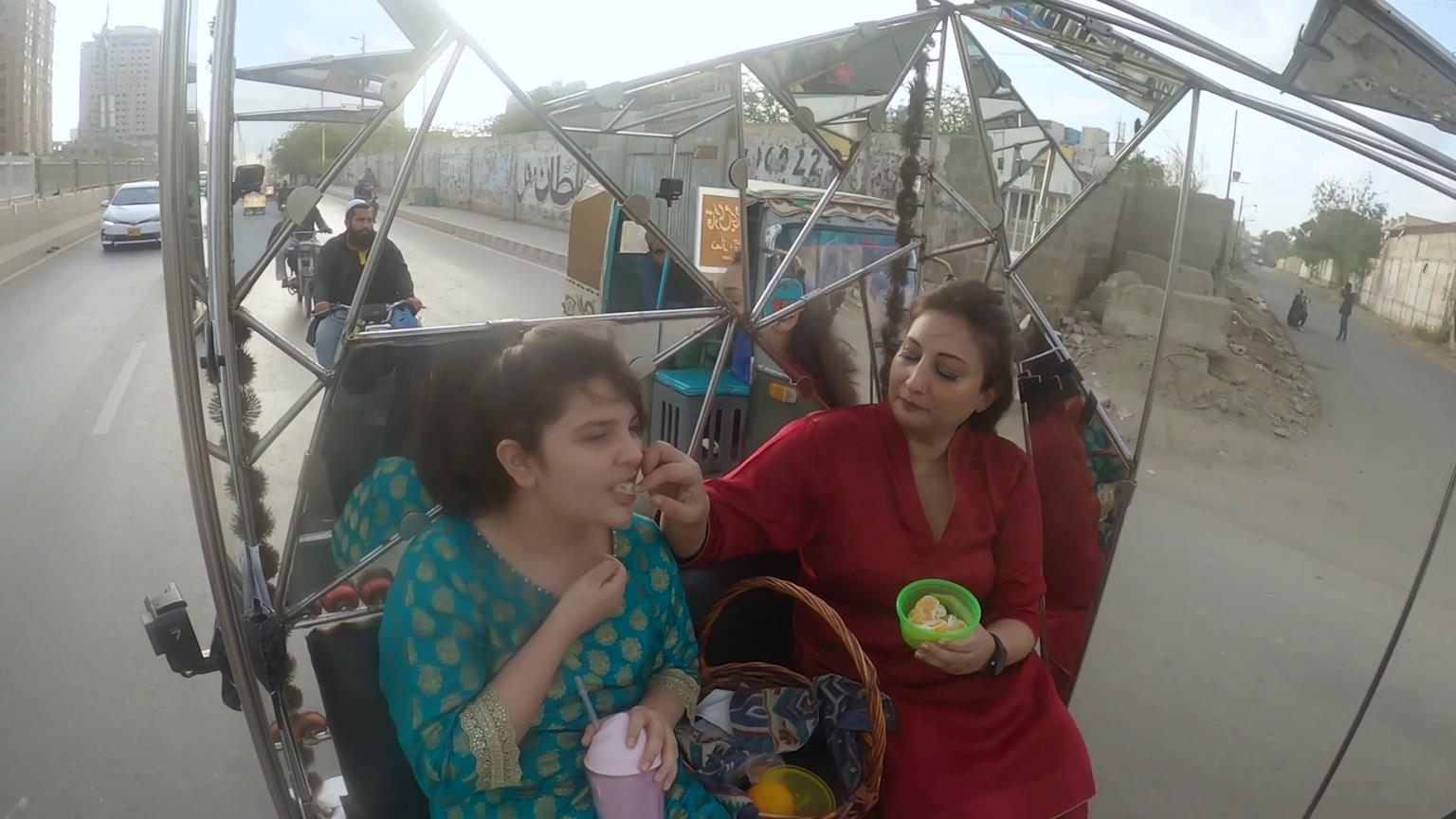
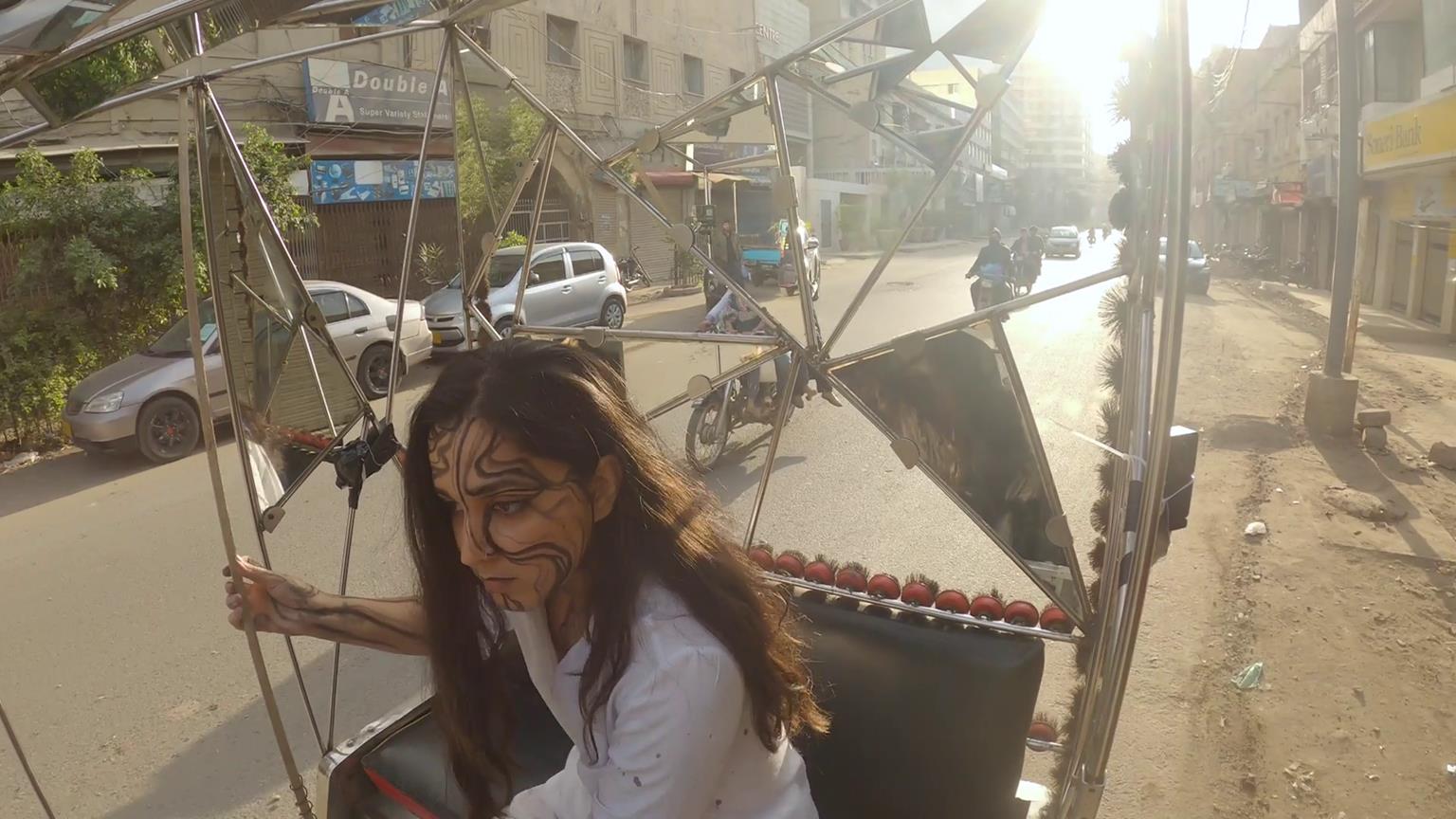
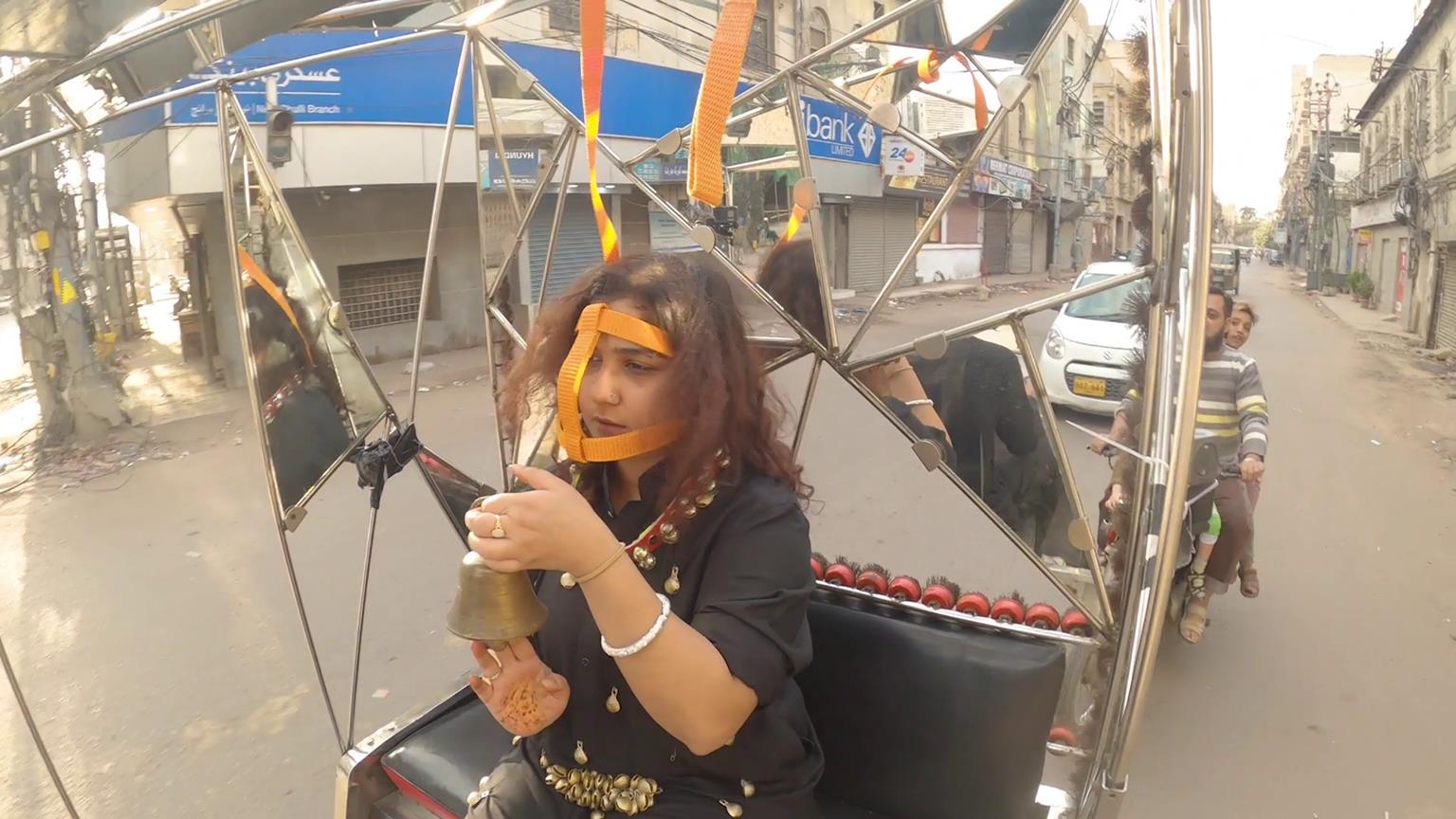
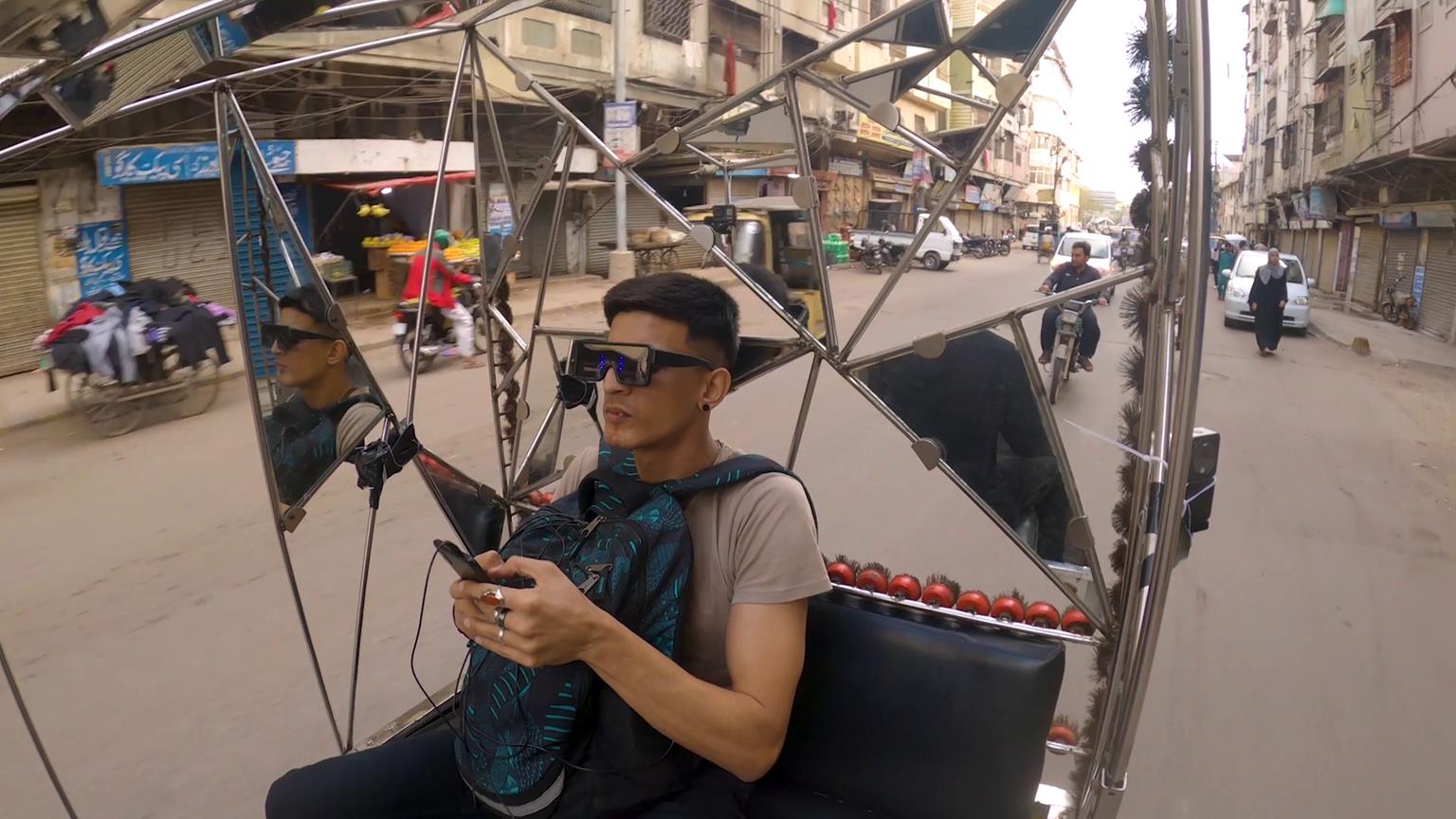
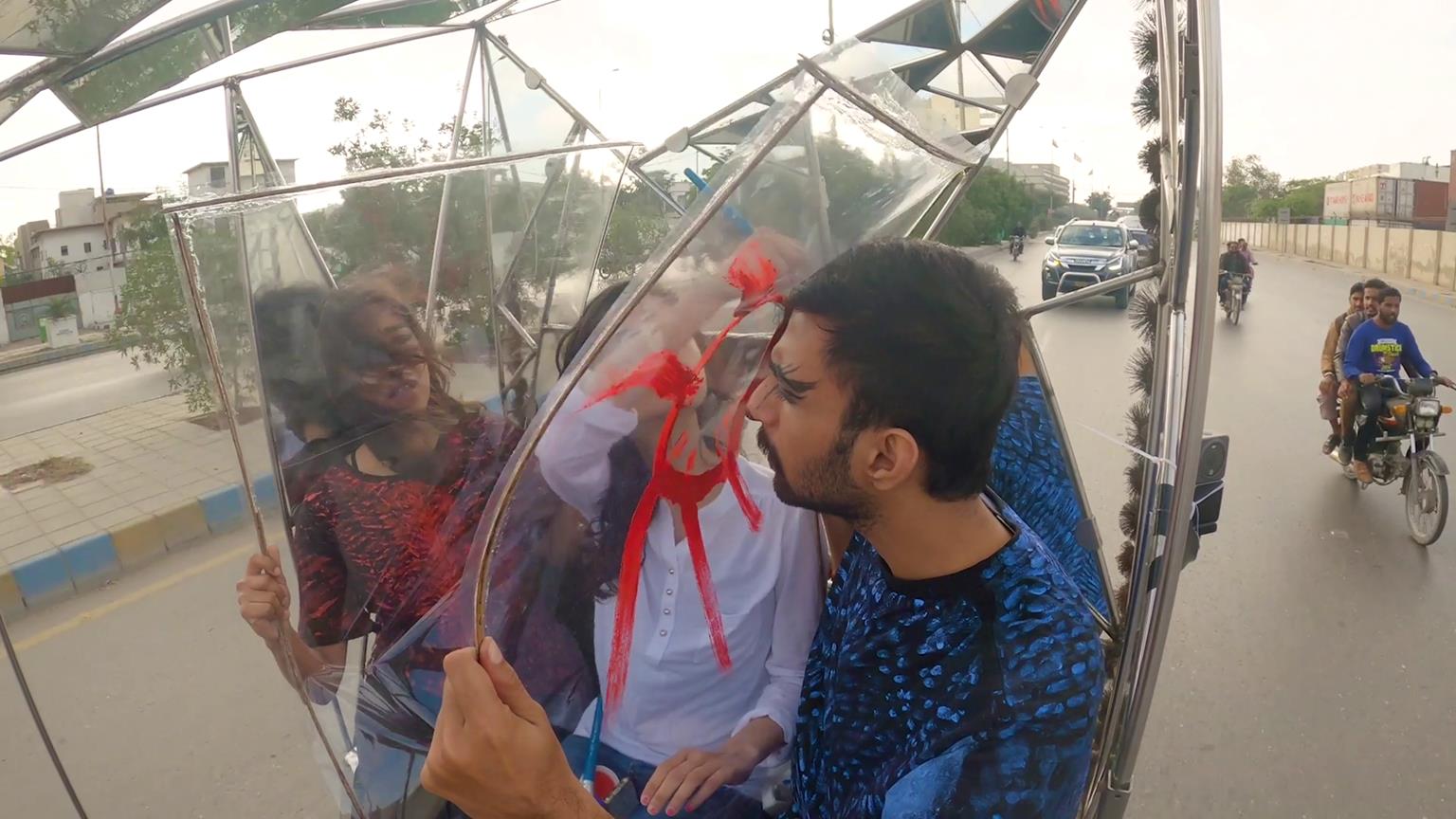
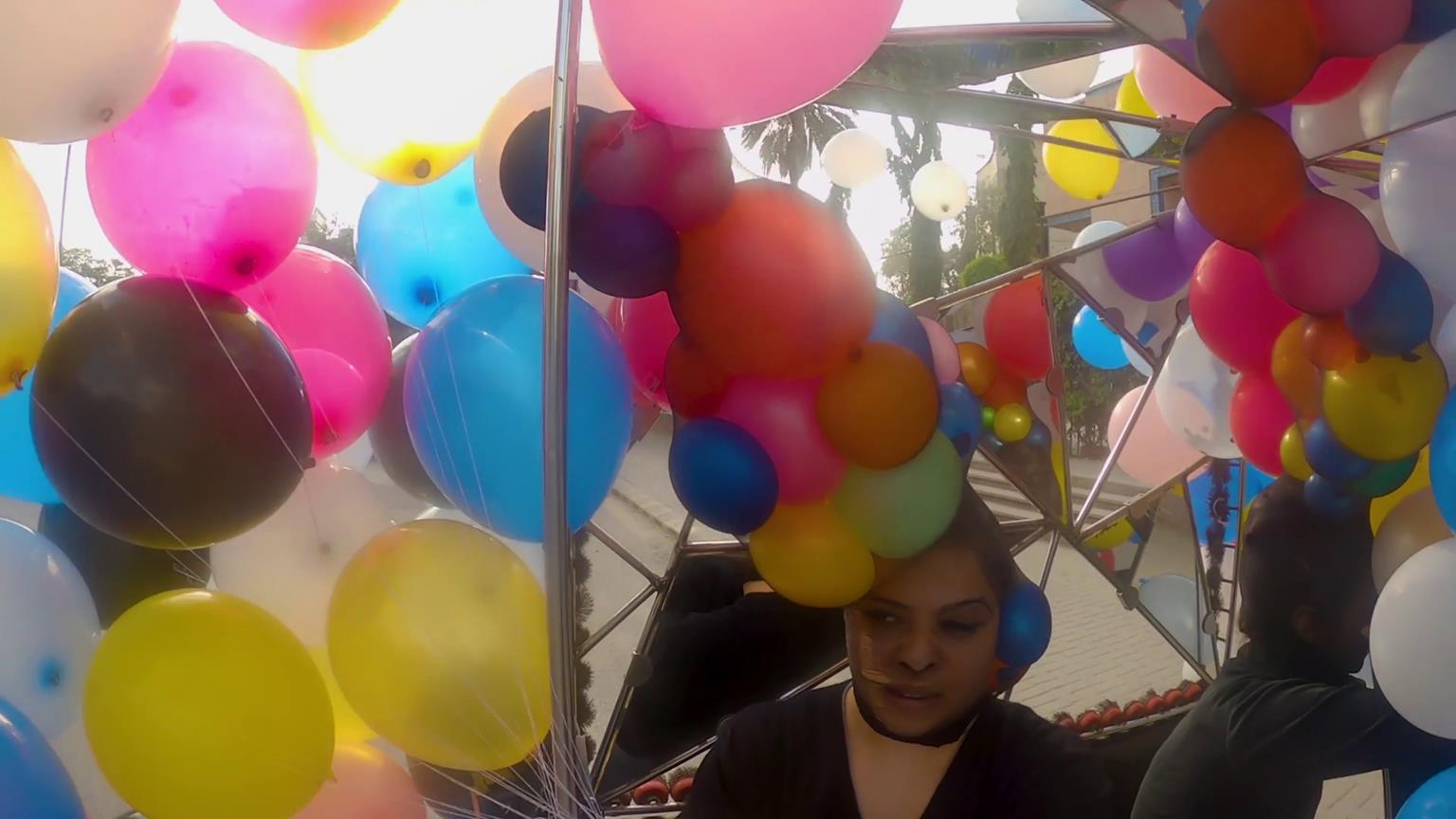
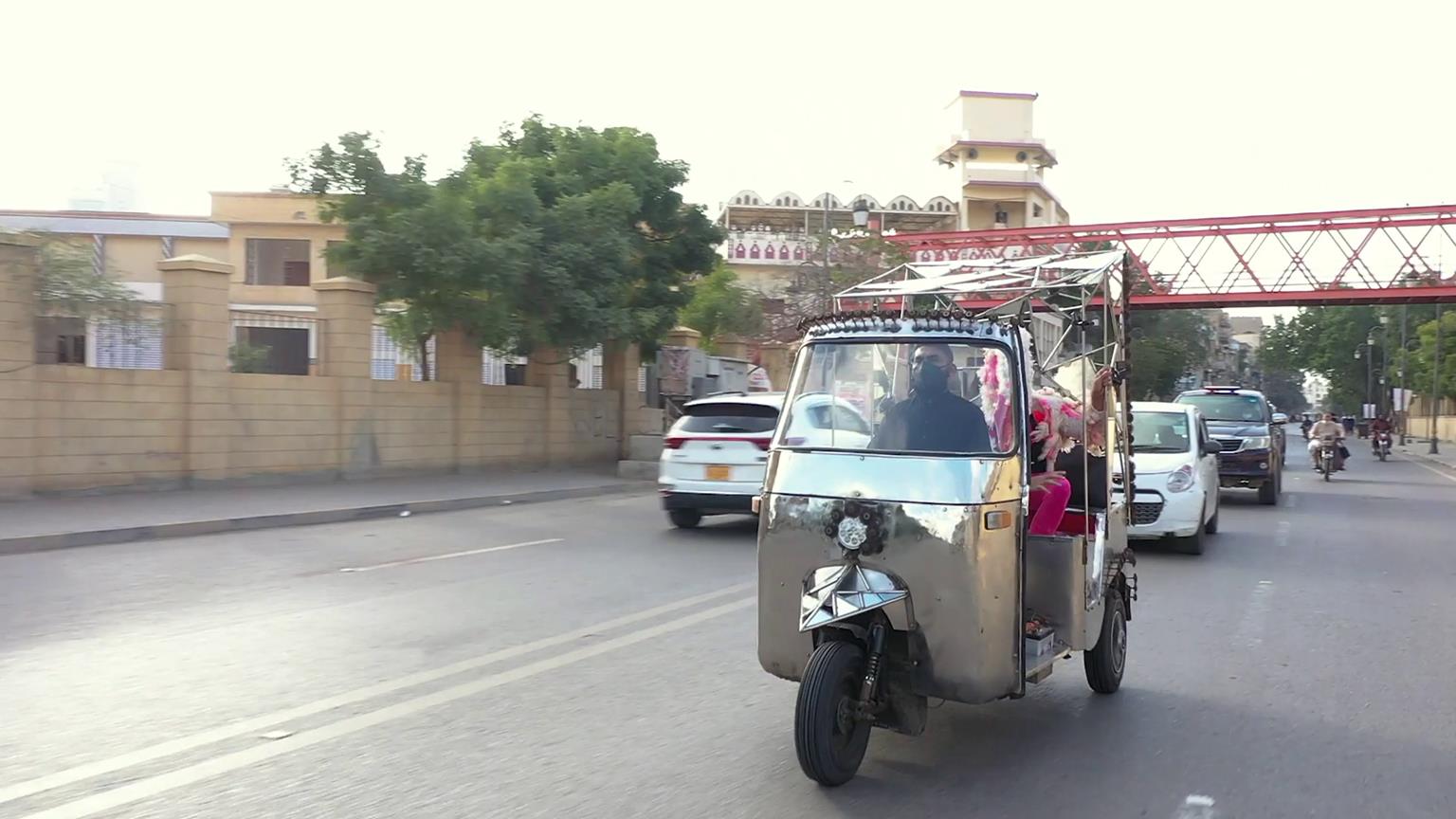
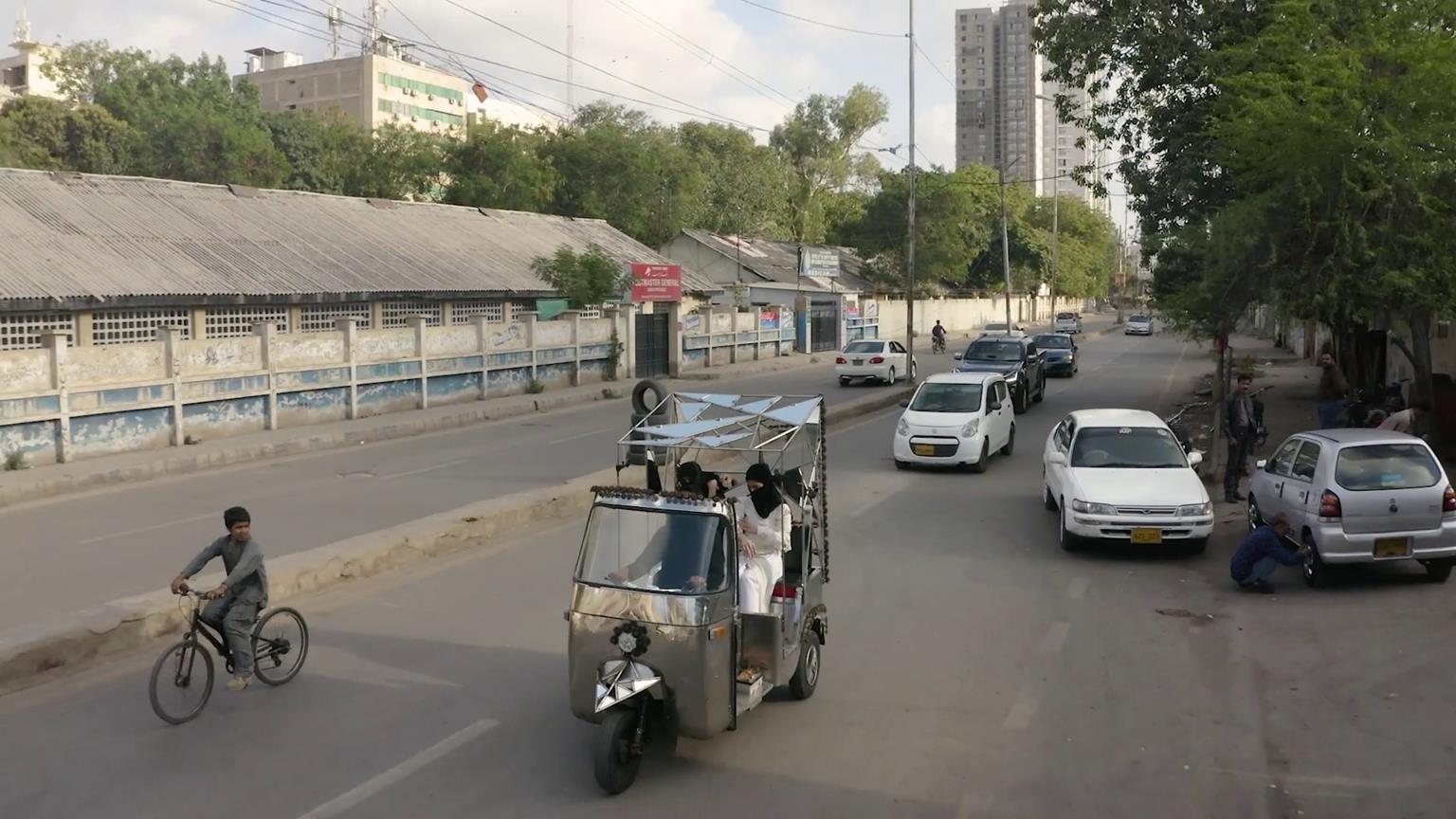
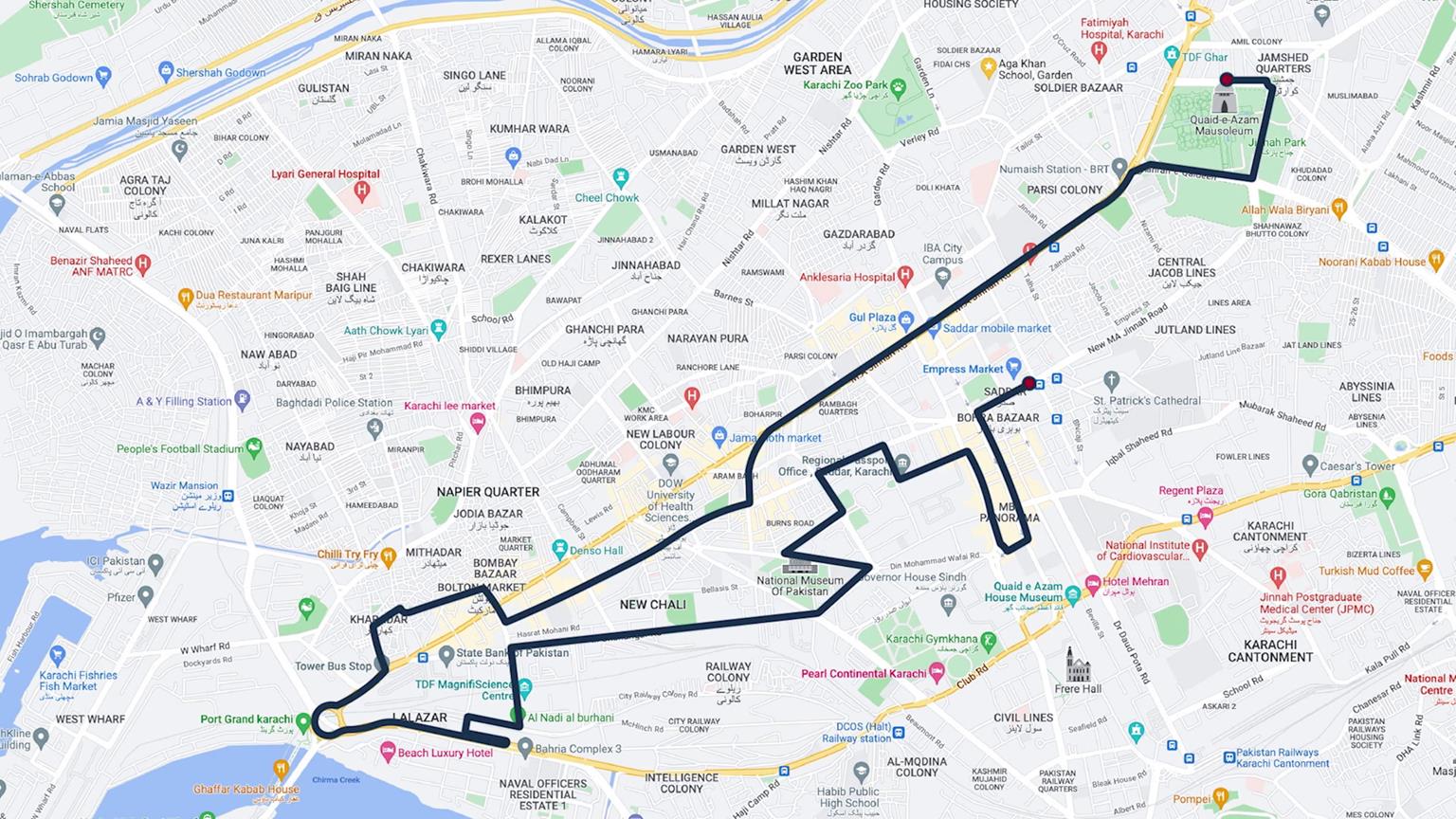
Amin and Adam-Fahy-Majeed co-curated The Q Rickshaw Project, which was documented by a 10-minute, 11-second video. From 4:37 pm till 5:53 pm on January 30, 2020, nine performance works successively occurred in the backseat of Amin’s Q Rickshaw, a tuk-tuk that he had recreated with a steel body trimmed with bells and a canopy of triangular mirror in 2015. Piloted by Anthony, Amin’s assistant in his workshop, this rolling sculpture made its way through the frenetic streets of Karachi’s bazaar, making nine predetermined stops, where the 14 performers (eleven women and three men) got on and off. Faryal Yazdanie presented The Artist Is Light with a female companion, who was dressed in a black abaya and niqab. Faryal’s face was also covered by a niqab, but rather than a black abaya, she wore a white shalwar, her torso and arms wrapped in white bandages. As the performance progressed, Faryal continued to bind herself with the white gauze. Maham Chiragh performed I am a trace you may not remember. Her face and arms streaked with black, almost cartographic lines, she held a long brush, which she used to “paint” the passing road with invisible markings. As a member of the Ahmadiyya, a movement originating in Punjab in the late 19th century that is officially considered non-Muslim in Pakistan, the artist saw the gesture as an act of resistance against the erasure of her community. As the sun began to set, the shadow of the rickshaw grew longer. In the final performance, Manizhe Ali and her young daughter Zohray, decked out in brightly colored, embroidered outfits, enjoyed a picnic in the backseat of the rickshaw as it wound its way through Karachi’s chaotic streets. This, for Manizhe, was their way of reclaiming the public space, which is so often denied to women in South Asia. The rickshaw picked them up at Capri Cinema, set on fire in 2012 by a mob enraged by the screening a film rumored to be un-Islamic, then dropped them off at Mazar-e-Qaid, the mausoleum of Pakistan’s founder.